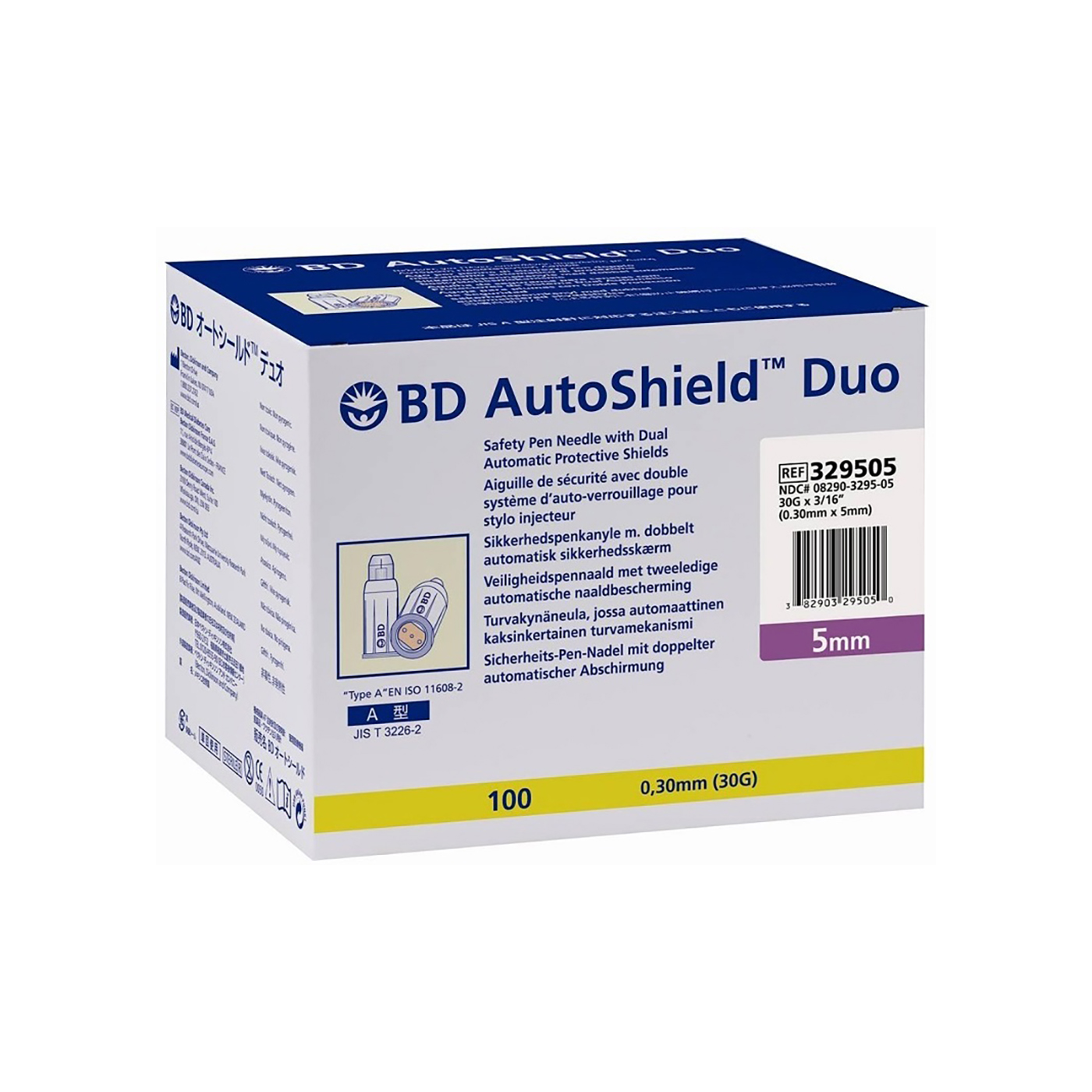
BD AutoShield Duo™ pen needle

Keep your injections safe and simple

329505_2.png
329505
Loading
tabs dropdown arrow
Overview

Needlestick injuries from insulin injections represent a major ongoing threat to the safety of healthcare workers and caregivers.1 In one survey, almost 1 in 4 nurses (~24%) have suffered a needlestick injury from giving injections to diabetes patients. 1,2^ In another study, insulin pens accounted for the most frequent cause of needlestick injuries in nursing homes (40%). 3¥ Both the front and back ends of pen needles pose a risk of exposure to bloodborne pathogen virus.4

Features and Benefits

Reduced risk of needlestick injury (NSI)

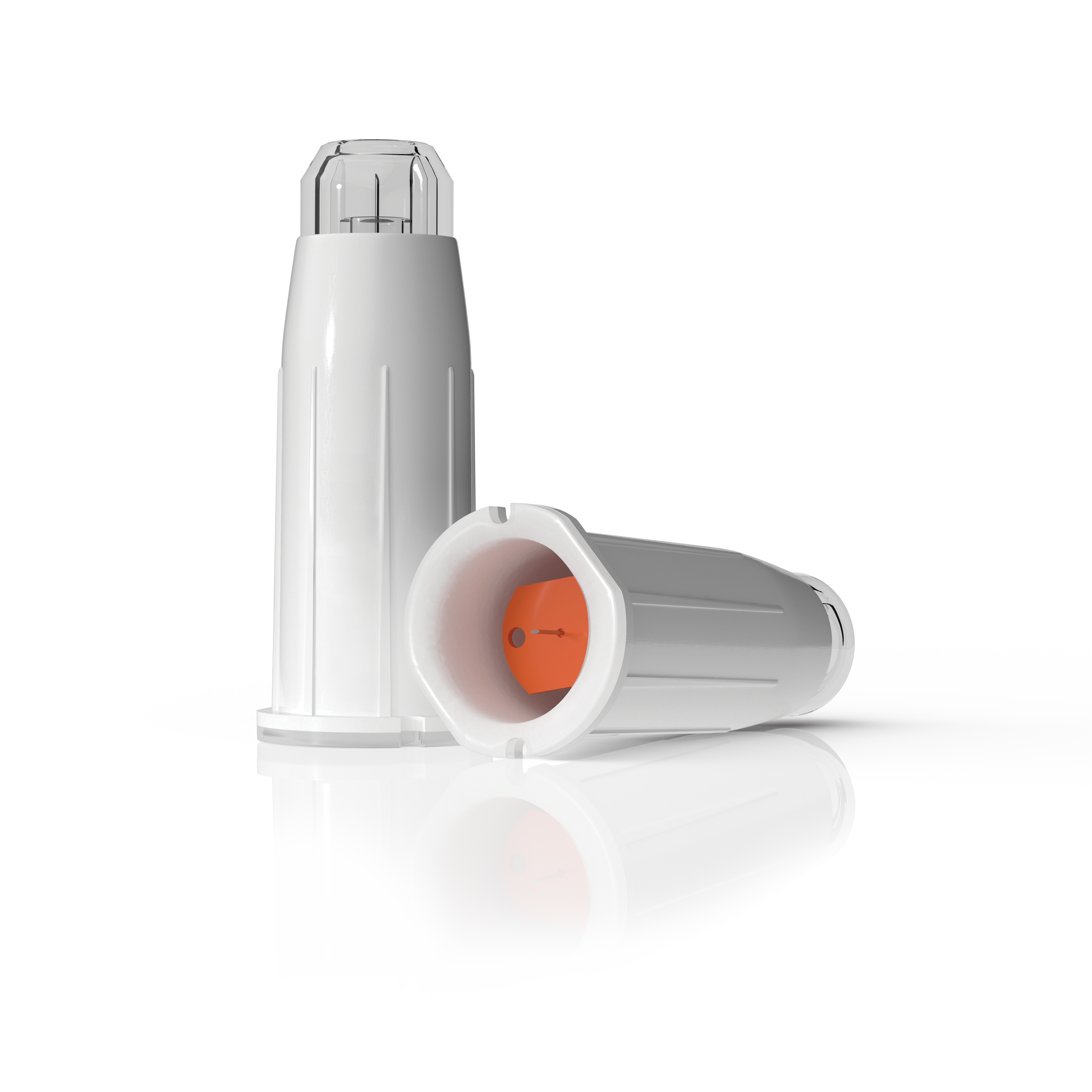
The BD AutoShield Duo™ is a safety pen needle designed with automatically activated protection at both ends of the needle after use to help prevent needlestick injuries needle during injection and disposal. 

Reliability

~95% of nurses agree that BD AutoShield Duo ™ has a reliable safety mechanism.

Visual safety confirmation

Red indicator band on the patient end and orange shield on the non-patient end confirm the activation of safety mechanism and protection after use.

Clear safety shield

Clear safety shield on the patient end of the needle covers the needle prior to injection, while enabling user to visualize the needle.

Single-handed injection technique

The BD AutoShield Duo™ safety pen needle with 5mm needle does not require a pinchup minimizing the risk of needlestick injury through a skinfold.6*†

Compatibility 

The BD AutoShield Duo™ safety pen needles are compatible with widely used pen injection devices.

^400 nurses in 381 different hospitals in the US voluntarily completed a survey. 

¥The study was conducted in 45 nursing homes from April 2002 through December 2007

«A double-blinded survey with 175 nurses from 36 states in the US commissioned in Fall 2021. 

*Patients ≤6 years old and very thin adults may require a pinch-up.

†To minimize the risk of NSI through a skinfold, the use of shorter (4-mm and 5-mm) pen needles without a skinfold is recommended

References

References: 

1. Frid AH, et al. New Insulin Delivery Recommendations. Mayo Clinic Proceedings. 2016;91(9):(supplappendix14):1-3

2. Lee JM,et al. Curr Med Res Opin. 2005;21(5):741-747 

3. Kiss P, et al. Infect Control Hosp Epidemiol. 2008;29:1192-1194

4. Costigliola V, et al. Diab Metab. 2012;38:S9-S14

5. Data on File. Self-reported Satisfaction and Evaluation of the BD AutoShield Duo™. A survey of acute care and skilled nursing users.

 6. Frid AH, et al. New Insulin Delivery Recommendations. Mayo Clinic Proceedings. 2016;91(9):1231–1255

7. BD Compatibility Confirmation for Pen Needles and Pen Injector Manufacturers. 149-OTH-0004-20, Rev S. February 2021.

References
false
Frequently Asked Questions
false
References

Notes

* Excluding safety insulin syringes

† Children from 2 to 6 years old, extremely lean adults or patients with loose skin may need to use a pinch-up technique.

References

  1. Frid AH, Kreugel G, Grassi G, et al. New insulin delivery recommendations. Mayo Clin Proc. 2016;91(9):1231-1255.
  2. Hirsch L, Gibney M, Berube J, Manocchio J. Impact of a modified needle tip geometry on penetration force as well as acceptability, preference, and perceived pain in subjects with diabetes. J Diabetes Sci Technol. 2012;6(2):328-335.

embecta, formerly part of BD. BD is the manufacturer of the advertised products.